








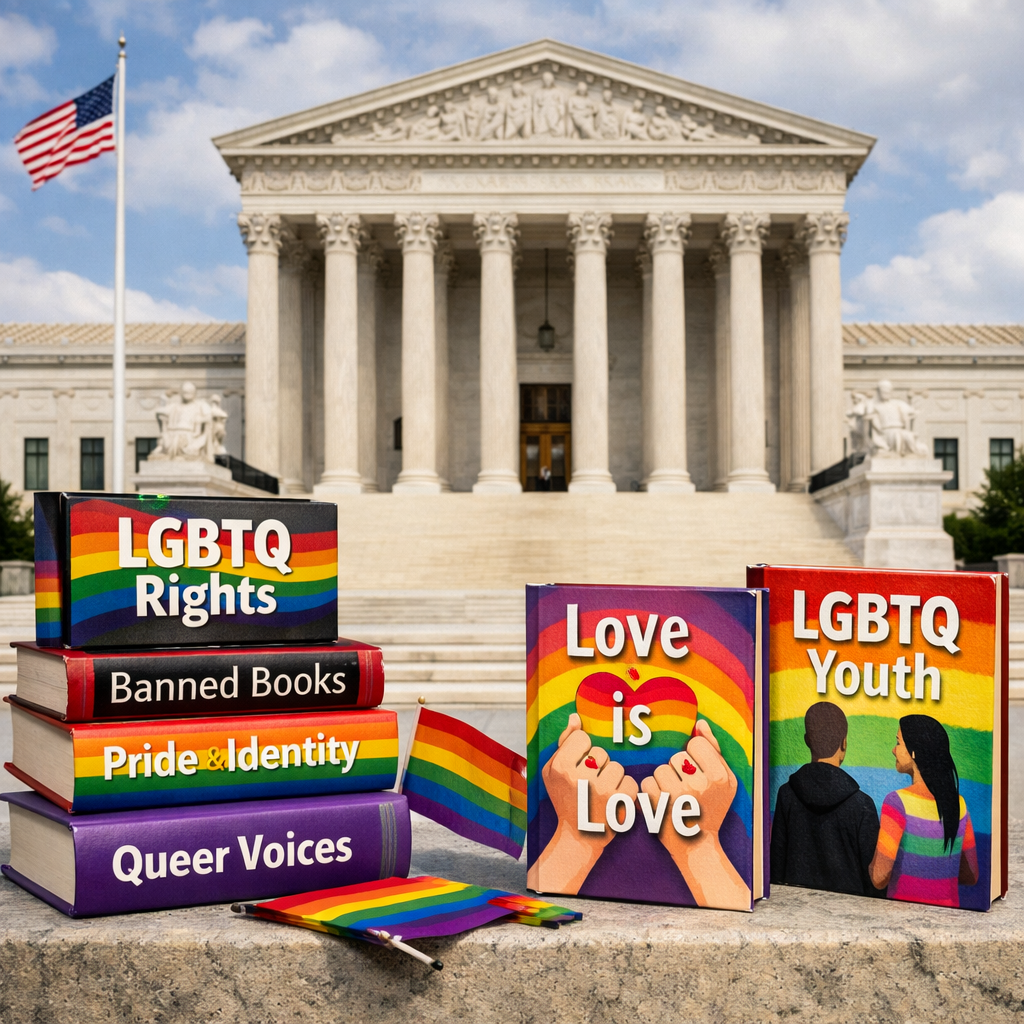
The topic supreme court lgbtq books has gained national attention in recent years. Across the United States, debates about book access, censorship, and LGBTQ+ representation have reached the highest levels of the legal system. At the center of these discussions is the Supreme Court, which plays a key role in shaping how schools, libraries, and communities handle books that reflect diverse identities.
This article explores how Supreme Court decisions and legal principles affect LGBTQ books, why these books matter, and what the future may hold for readers, educators, and families.
Understanding the Role of the Supreme Court
The Supreme Court is the highest court in the United States. Its job is to interpret the Constitution and decide whether laws or government actions are legal.
When disputes arise over books—especially those involving LGBTQ+ themes—they often involve constitutional rights. These include freedom of speech, freedom of expression, and equal protection under the law.
While the Court has not ruled on every book-related dispute, its past decisions strongly influence how lower courts handle cases involving LGBTQ books.
Why LGBTQ Books Become Legal Issues
Books with LGBTQ+ characters or themes are often challenged in schools and libraries. Critics may claim these books are inappropriate, while supporters argue they provide representation and promote understanding.
Legal conflicts arise when books are removed or restricted by public institutions. Because schools and libraries are government-run, their actions must follow constitutional rules. This is where courts—and sometimes the Supreme Court—come into play.
The debate around supreme court lgbtq books is really about balancing parental concerns, student rights, and freedom of expression.
Key Supreme Court Principles That Apply
Even without a direct ruling on LGBTQ books, the Supreme Court has set important standards.
One major case, Board of Education v. Pico (1982), ruled that schools cannot remove books simply because they dislike the ideas inside them. This decision is often cited in cases involving LGBTQ book bans.
The Court has also ruled that students do not “shed their constitutional rights at the schoolhouse gate.” This idea supports the argument that students have a right to access diverse viewpoints, including LGBTQ stories.
LGBTQ Books and Freedom of Speech
Freedom of speech is a cornerstone of American democracy. Books are a form of speech, and restricting them can raise serious constitutional concerns.
When public schools remove LGBTQ books based on their themes alone, courts may view this as viewpoint discrimination. That means the government is favoring one viewpoint over another, which is generally not allowed.
The Supreme Court’s past rulings make it clear that discomfort is not a valid reason to suppress ideas.
The Importance of LGBTQ Representation in Books
LGBTQ books help readers see themselves reflected in stories. For LGBTQ youth, this representation can be especially meaningful.
These books also help other readers build empathy and understanding. They show that families, friendships, and identities come in many forms.
From a legal perspective, denying access to these books may unfairly single out one group, raising concerns about equality and fairness.
Recent Legal Battles and Lower Courts
While the Supreme Court has not yet issued a definitive ruling specifically on LGBTQ book bans, lower courts are actively handling these cases.
Many judges rely on Supreme Court precedents when deciding whether book removals are constitutional. In several cases, courts have blocked bans, arguing they violate free speech rights.
These ongoing cases keep the issue of supreme court lgbtq books in the public eye and may eventually lead to a direct Supreme Court ruling.
What This Means for Schools and Libraries
Schools and libraries must be careful when making decisions about book collections. Policies should be based on educational value, not personal or political beliefs.
Clear review processes, transparency, and respect for diverse viewpoints can help institutions avoid legal trouble.
Supreme Court guidance suggests that inclusion, rather than exclusion, is the safer and fairer path.
The Future of LGBTQ Books and the Supreme Court
As book challenges continue, it is possible that the Supreme Court will directly address LGBTQ book bans in the future.
If that happens, the decision could set a nationwide standard. It could either strengthen protections for diverse books or give more power to local authorities.
Either way, the outcome will have a lasting impact on education, libraries, and free expression.
Conclusion
The discussion around supreme court lgbtq books goes far beyond reading lists. It touches on freedom, equality, and the right to learn from different perspectives.
Supreme Court principles already play a major role in protecting access to ideas, even controversial ones. As society continues to debate representation and rights, LGBTQ books remain a powerful symbol of inclusion and constitutional freedom.
Ensuring access to these books is not just about stories—it is about upholding the values of an open and democratic society.