







What Is a Geek, Really?
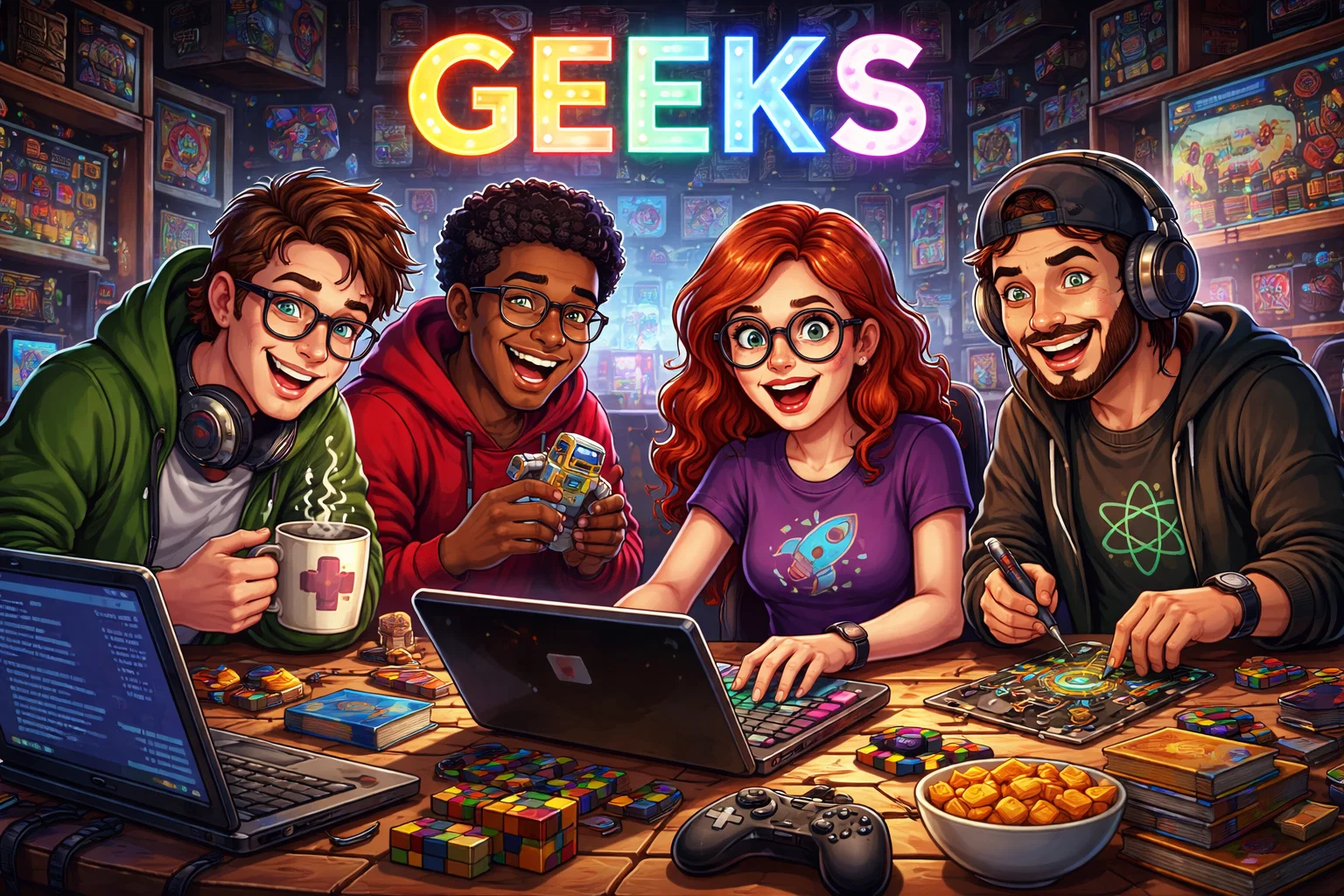
A geek is someone who pursues knowledge and passion with unusual depth and intensity. Unlike the outdated stereotype of an awkward loner, modern geeks are found everywhere: in boardrooms, classrooms, labs, film sets, and sports arenas.
The defining trait of a geek is not social awkwardness but rather obsessive curiosity. Geeks do not just like things. They study them, memorize them, debate them, and build communities around them.
Common Types of Geeks
- Tech geeks who live and breathe software, hardware, and emerging technologies
- Gaming geeks who treat video games as an art form and community
- Science geeks who chase ideas across physics, biology, astronomy, and beyond
- Pop culture geeks passionate about comics, anime, films, and fiction worlds
- Data geeks who see patterns in numbers and love statistics
A Brief History of Geek Culture
Geek culture did not appear overnight. Its roots stretch back to the early days of science fiction fandom in the 1920s and 1930s, when readers of pulp magazines began forming clubs and writing letters to each other about fictional worlds and scientific possibilities.
The personal computer revolution of the 1970s and 1980s gave geeks a new and powerful playground. Teenagers in garages began building machines that would reshape civilization. Names like Bill Gates, Steve Wozniak, and later Linus Torvalds became proof that obsessive tinkering had real-world value.
The internet changed everything again. Geeks now had a global village where niche interests could find massive communities. Forums, wikis, open-source projects, and fan sites exploded. Being deeply knowledgeable about something specific became not just acceptable but admirable.
According to research covered by Pew Research Center’s Internet & Technology division, internet adoption closely tracked with the rise of participatory geek communities, fundamentally reshaping how knowledge and enthusiasm spread online.
Geeks by the Numbers
Note: Figures are approximate and drawn from industry reports. Treat as directional, not exact.
Why Geeks Matter More Than Ever
We are living in what many call the “Geek Economy.” The skills that define geek culture, deep focus, technical literacy, pattern recognition, and creative problem-solving, are precisely the skills that 21st-century economies reward most generously.
They Build the Tools We All Use
Every app on your phone, every streaming platform you love, every medical device that saves lives in hospitals: these were designed, coded, and refined by people who cared obsessively about how things work. Geek passion is the upstream source of most modern convenience.
They Keep Knowledge Alive
Geeks are the world’s most dedicated archivists. From maintaining open-source software libraries used by millions to running fan wikis that document entire fictional universes in extraordinary detail, geeks ensure that knowledge is organized, preserved, and accessible.
They Create Culture
Look at the biggest entertainment franchises of the past two decades. Marvel, Star Wars, The Lord of the Rings, Dungeons and Dragons, and esports. All of them grew from geek communities long before they became mainstream phenomena. Geeks are early adopters and passionate evangelists, and mainstream culture increasingly follows where they lead.
Challenges Geeks Still Face
Despite the cultural rehabilitation of the geek identity, real challenges remain. Imposter syndrome is common in technical communities, where people constantly compare themselves to peers who seem more skilled or more knowledgeable.
Geek spaces have also historically struggled with inclusivity. Women, people of color, and LGBTQ+ individuals have faced gatekeeping and hostility in communities that should, by their own values, welcome anyone with genuine passion.
There is also the risk of obsessive focus becoming isolation. Deep expertise is valuable, but geeks who struggle to communicate their knowledge to non-specialists can find their impact limited. The most effective geeks learn to bridge the gap between deep knowledge and accessible communication.
The IEEE Spectrum, one of the most authoritative engineering publications in the world, regularly covers these cultural dynamics alongside technical content, recognizing that people skills matter as much as technical ones.
How to Embrace Your Inner Geek
If you have ever felt embarrassed about loving something “too much,” this section is for you. Embracing geek identity is not about adopting a costume or watching the right movies. It is about giving yourself permission to go deep on the things that genuinely fascinate you.
- Pick your passion and go deep. Do not spread yourself thin. Choose one or two areas you care about and commit to genuine mastery.
- Find your community. Every geek interest has a thriving community online and often offline. These groups accelerate learning and make the journey far more enjoyable.
- Create, do not just consume. The best geeks make things: code, fan art, YouTube explainers, mods, articles. Creation deepens understanding and builds reputation.
- Teach what you know. Explaining something to someone else is the fastest way to find the gaps in your own knowledge. Share freely.
- Cross-pollinate your interests. The most original ideas often come from connecting two separate fields of deep knowledge in an unexpected way.
Frequently Asked Questions
Conclusion
Geeks were never the fringe. They were always the pioneers, working in obscurity until the rest of the world caught up. The passion, depth, and curiosity that define geek identity are the same qualities that drive scientific breakthroughs, cultural movements, and technological progress.
Whether you are a lifelong geek or someone just discovering a deep passion for the first time, the message is clear: going deep is worth it. The world needs people who care intensely, who stay curious, and who are willing to become genuinely expert in the things that matter to them.
Your obsession might be exactly what someone else needs.