








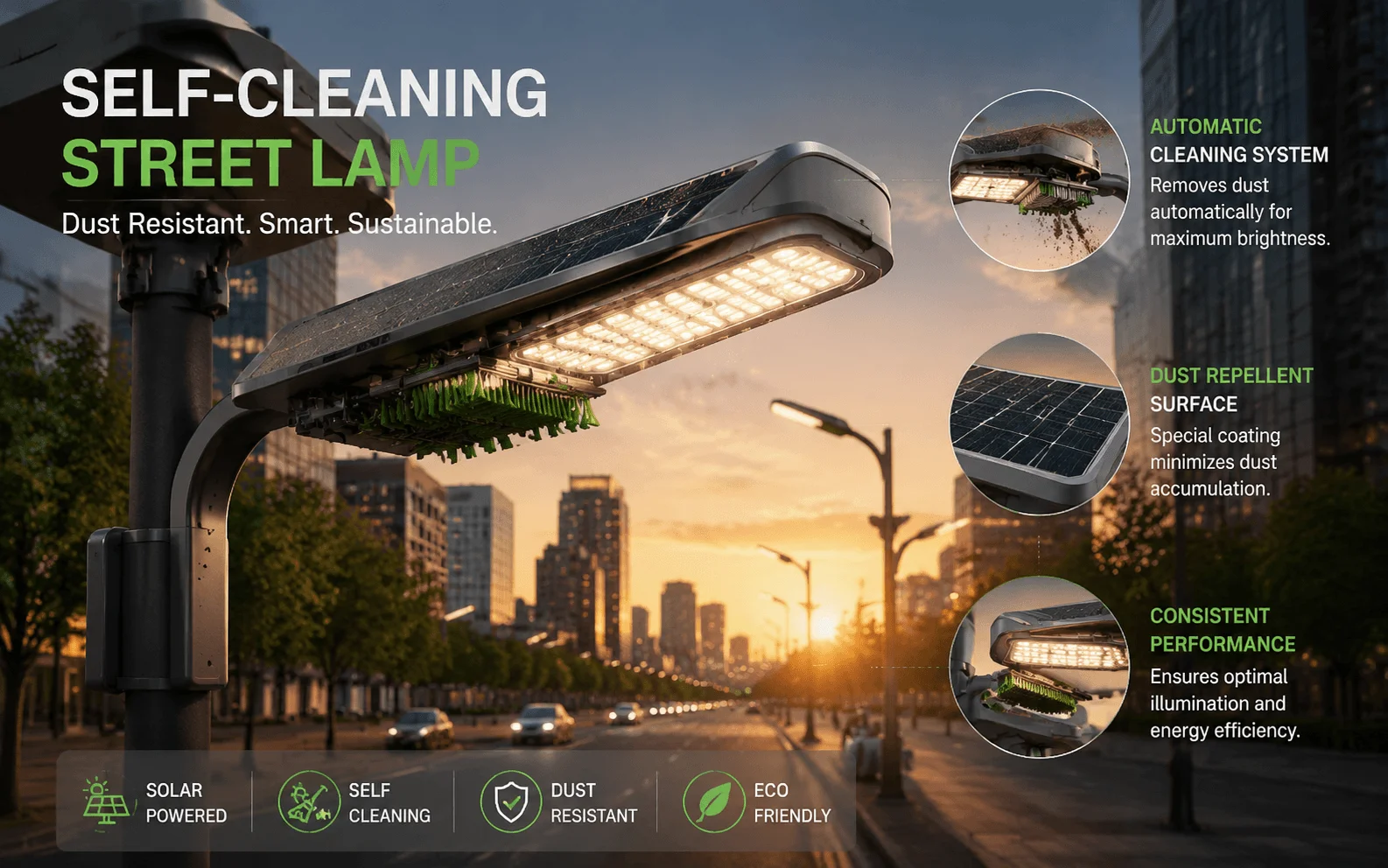
As cities and communities look for ways to improve energy efficiency, reduce maintenance costs, and enhance sustainability, self-cleaning street lamps have become an exciting innovation. This article delves into the technology behind self-cleaning street lamps, how they function, their benefits, and their practical applications in smart city projects.
Let’s explore how this groundbreaking technology works and why dust-resistant street lamps are essential in the modern world.
What is a Self-Cleaning Street Lamp? (Definition & Technology)
A self-cleaning street lamp is a type of streetlight designed to automatically clean itself, reducing the need for regular manual cleaning. These lamps are equipped with specialized systems that help remove dust, dirt, and other debris, ensuring that the lights remain bright and functional.
Key Features of Self-Cleaning Street Lamps:
- Automatic Cleaning Systems: Self-cleaning mechanisms that operate at set intervals or through sensor-based triggers.
- Dust-Resistant Coatings: Materials used in the lamp’s design help repel dust and debris.
- Energy-Efficiency: Solar-powered designs that minimize energy usage and costs.
These lamps are most beneficial in environments where traditional cleaning is difficult or costly, such as in arid, high-pollution areas or locations with frequent weather conditions that cause dust accumulation.
How Does a Self-Cleaning Street Lamp Work?
Self-cleaning street lamps use a combination of solar power, innovative cleaning systems, and durable materials to keep the lamp clean and efficient. Here’s a breakdown of the working mechanism:
- Solar Power Collection: Solar panels collect energy during the day and store it for use at night. This makes the system energy-efficient and eco-friendly.
- Self-Cleaning Mechanism: The cleaning system uses either a vibration system, water spray, or air jets to remove dust from the lamp’s surface, preventing dirt accumulation.
- Dust-Resistant Materials: Many self-cleaning street lamps use hydrophobic coatings or nano-coatings that repel dirt and water. These coatings reduce the need for manual cleaning.
- Smart Sensors: Some advanced models are equipped with sensors that detect the accumulation of dirt or dust and trigger the cleaning process accordingly.
Benefits of Self-Cleaning Street Lamps
Self-cleaning street lamps bring numerous advantages that make them ideal for modern urban infrastructure:
1. Reduced Maintenance Costs
Since the lamps clean themselves, maintenance costs related to cleaning are significantly reduced. This saves money for municipalities and businesses that would otherwise need to hire cleaning crews.
2. Improved Efficiency
With the automated cleaning mechanism, the lamps maintain their brightness and efficiency without the interference of dirt. This is crucial for street lighting in areas that see frequent dust storms or where air quality is poor.
3. Eco-Friendly
These lamps are solar-powered, which means they harness clean, renewable energy to function. This reduces the carbon footprint of street lighting and helps cities reduce their reliance on fossil fuels.
4. Longer Lifespan
With fewer maintenance needs and self-cleaning features, the lifespan of the lamps is extended. This makes them a cost-effective solution in the long run.
5. Aesthetics
Self-cleaning lamps look more polished and professional because they maintain their cleanliness and shine, making them visually appealing in urban landscapes.
Practical Applications and Real-World Examples
The Geeks IT technology behind self-cleaning street lamps can be applied in various urban and rural settings:
1. Smart City Infrastructure
Cities aiming to become “smart cities” are adopting self-cleaning street lamps as part of their sustainable urban development initiatives. These lamps contribute to energy savings, environmental sustainability, and reduced operational costs.
2. Harsh Weather Areas
In places where dust accumulation is frequent—such as deserts or areas prone to dust storms—self-cleaning street lamps can maintain their functionality without needing constant intervention.
3. Coastal and Industrial Zones
In coastal or industrial areas where air pollution and salt deposition are common, the dust-resistant coating and self-cleaning systems of these lamps make them the ideal lighting solution.
Common Questions About Self-Cleaning Street Lamps
Q1: What is a self-cleaning street lamp?
A: A self-cleaning street lamp is designed with an automated system to clean its surface regularly, ensuring that dust, dirt, and grime do not obstruct its functionality.
Q2: How do self-cleaning street lamps work?
A: These lamps work by using solar panels, smart sensors, and a self-cleaning mechanism (e.g., air jets or vibration) to maintain cleanliness and efficiency.
Q3: Can self-cleaning lamps reduce maintenance costs?
A: Yes, by automating the cleaning process, cities can save significantly on manual cleaning services and maintenance.
Q4: Are self-cleaning lamps eco-friendly?
A: Yes, most self-cleaning street lamps are solar-powered, reducing reliance on fossil fuels and helping cities achieve sustainability goals.
Q5: What makes self-cleaning street lamps more durable?
A: The use of dust-resistant coatings, smart sensors, and the solar-powered design helps these lamps last longer with minimal maintenance.
Why Self-Cleaning Street Lamps Matter for the Future
Self-cleaning street lamps are an essential part of future urban development. They help cities save money, improve efficiency, and promote eco-friendly practices. As technology advances, these lamps are becoming an integral part of smart city infrastructure, offering long-term sustainability and cost-effectiveness.
Conclusion
Self-cleaning street lamps represent a revolution in urban lighting. With their ability to automatically maintain cleanliness, reduce maintenance costs, and improve lighting efficiency, they offer a smart, sustainable solution for modern cities. Whether used for smart city projects or in areas with harsh weather conditions, self-cleaning lamps are transforming how we think about street lighting.