




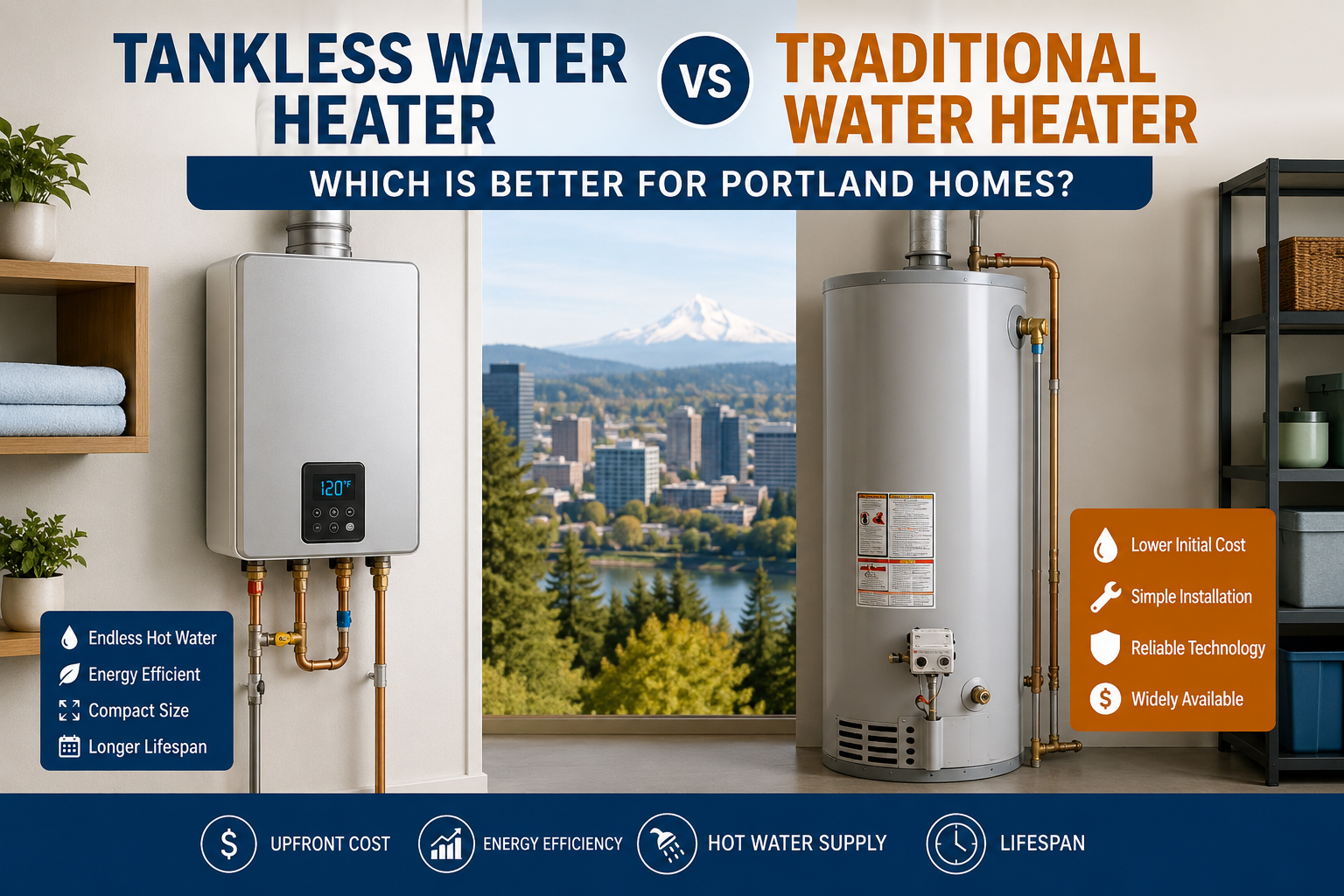
Choosing the right water heater is important for every homeowner in Portland. Hot water is needed every day for showers, washing dishes, laundry, and cleaning. When it is time to replace an old unit, many people ask the same question: should they choose a tankless water heater or a traditional water heater?
Both systems have benefits and drawbacks. The best option depends on your home size, budget, energy needs, and lifestyle. In this guide, we will compare tankless and traditional water heaters in simple terms so Portland homeowners can make the right decision.
Table of Contents
ToggleWhat Is a Traditional Water Heater?
A traditional water heater, also called a storage tank water heater, stores hot water in a large tank. Most tanks hold between 30 and 80 gallons of water.
The system heats the water and keeps it warm all day and night. When you turn on the faucet, hot water comes from the tank.
Common Features of Traditional Water Heaters
- Large storage tank
- Lower installation cost
- Simple technology
- Available in gas or electric models
- Easy to repair and maintain
Traditional systems are very common in older Portland homes.
What Is a Tankless Water Heater?
A tankless water heater heats water only when needed. It does not store water in a tank. Instead, cold water passes through heating elements or gas burners and becomes hot instantly.
This is why many people call them “on-demand” water heaters.
Common Features of Tankless Water Heaters
- No storage tank
- Compact size
- Energy-efficient operation
- Endless hot water supply
- Modern technology
Tankless systems are becoming more popular in Portland because homeowners want to save energy and space.
How Traditional Water Heaters Work
Traditional systems continuously heat water inside the tank. Even when no one is using hot water, the system keeps reheating the stored water to maintain temperature.
This process is called standby heat loss.
Example
Imagine you wake up in the morning and take a shower. The tank already contains hot water ready to use. After the hot water is used, the tank refills and reheats more water.
How Tankless Water Heaters Work
Tankless units activate only when hot water is needed.
When someone opens a hot water faucet:
- Cold water enters the unit
- Gas burners or electric elements heat the water
- Hot water flows directly to the faucet
The unit shuts off when the faucet closes.
This system avoids energy waste from storing hot water all day.
Tankless Water Heater vs Traditional Water Heater
Let’s compare both systems in detail.
1. Energy Efficiency
Tankless Water Heater
Tankless systems are usually more energy-efficient because they heat water only when needed.
Benefits include:
- Lower monthly energy bills
- Less wasted energy
- Eco-friendly performance
This can be especially useful in Portland, where homeowners often focus on energy savings and sustainable living.
Traditional Water Heater
Traditional systems use more energy because they constantly maintain hot water temperature inside the tank.
Even when no one uses hot water, energy is still consumed.
Winner: Tankless Water Heater
2. Hot Water Supply
Tankless Water Heater
Tankless systems provide continuous hot water. You can shower longer without running out.
This is useful for:
- Large families
- Homes with multiple bathrooms
- Homes with heavy hot water use
Traditional Water Heater
Traditional systems can run out of hot water if too much is used quickly.
For example:
- Multiple showers at the same time
- Laundry and dishwasher running together
Once the tank empties, you must wait for reheating.
Winner: Tankless Water Heater
3. Installation Cost
Tankless Water Heater
Tankless units usually cost more to install because:
- Advanced technology
- Special venting may be needed
- Gas line upgrades may be required
Traditional Water Heater
Traditional systems are more affordable upfront.
Installation is often simpler and faster.
Winner: Traditional Water Heater
4. Lifespan
Tankless Water Heater
Tankless systems often last:
- 15 to 20 years or more
With proper maintenance, they can work efficiently for a long time.
Traditional Water Heater
Traditional tanks usually last:
- 8 to 12 years
The tank can rust or develop leaks over time.
Winner: Tankless Water Heater
5. Space Requirements
Tankless Water Heater
Tankless units are compact and mounted on walls.
Benefits include:
- Saves floor space
- Fits small homes
- Cleaner utility area
Traditional Water Heater
Traditional tanks take up more room because of their large size.
Winner: Tankless Water Heater
6. Maintenance Needs
Tankless Water Heater
Tankless systems need regular maintenance to prevent mineral buildup, especially in areas with hard water.
Traditional Water Heater
Traditional systems also need maintenance, including:
- Tank flushing
- Sediment removal
- Anode rod inspection
Both systems require care for long-term performance.
Winner: Tie
7. Performance During Portland Winters
Portland winters can be cold and rainy. Water heating performance matters during colder months.
Tankless Water Heater
Modern tankless systems perform well, but extremely high demand may reduce flow rate temporarily.
Traditional Water Heater
Traditional systems keep a full tank of hot water ready at all times.
For some families, this feels more reliable during cold mornings.
Winner: Depends on Household Needs
Benefits of Tankless Water Heaters for Portland Homes
Many Portland homeowners now prefer tankless systems because of their modern features.
Key Advantages
Lower Energy Bills
Energy-efficient heating helps reduce monthly costs.
Endless Hot Water
Perfect for busy families.
Longer Lifespan
A long-lasting investment for homeowners.
Eco-Friendly Choice
Less energy waste helps reduce environmental impact.
Saves Space
Ideal for smaller Portland homes or apartments.
Some homeowners contact tankless water heater experts portland oregon when upgrading older heating systems to modern energy-saving models.
Benefits of Traditional Water Heaters
Traditional systems still offer many advantages.
Key Advantages
Lower Initial Cost
Great for homeowners on a budget.
Easier Installation
Most homes already support tank systems.
Reliable Technology
Simple systems with widely available parts.
Better for Lower Hot Water Demand
Small households may not need endless hot water.
Which Water Heater Is Better for Small Homes?
For smaller Portland homes:
Tankless May Be Better Because:
- Takes less space
- Uses less energy
- Provides enough hot water for small families
However, if the budget is limited, a traditional unit may still be a good choice.
Which Water Heater Is Better for Large Families?
Large households often use hot water frequently throughout the day.
Tankless Benefits
- Continuous hot water
- Better for multiple showers
- Supports larger demand
Traditional Limitations
- Tank can empty quickly
- Recovery time needed
For bigger families, tankless systems are often more practical.
Cost Comparison
Traditional Water Heater Costs
Typical costs include:
- Lower equipment price
- Lower installation expenses
- Higher long-term energy bills
Tankless Water Heater Costs
Typical costs include:
- Higher installation cost
- Lower monthly utility bills
- Longer-term savings
Although tankless systems cost more upfront, they may save money over time.
Signs You May Need a New Water Heater
No matter which system you choose, replacement may be necessary if you notice:
- Rusty water
- Water leaks
- Strange noises
- Inconsistent hot water
- Rising energy bills
- Old system age
Replacing an outdated unit can improve comfort and efficiency.
Tips for Choosing the Right Water Heater
Before making a decision, consider these factors:
1. Household Size
More people usually need more hot water.
2. Budget
Think about both upfront and long-term costs.
3. Energy Efficiency Goals
Tankless systems often reduce energy use.
4. Available Space
Small homes benefit from compact units.
5. Future Plans
Long-term homeowners may benefit more from tankless investments.
Professional Installation Matters
Proper installation is very important for both systems.
A professional installer can help with:
- Correct sizing
- Safe gas or electric connections
- Venting requirements
- Energy efficiency setup
Poor installation can reduce performance and increase repair costs.
Final Thoughts
Both tankless and traditional water heaters have advantages. The best option depends on your home’s needs, budget, and hot water usage.
Choose a tankless water heater if you want:
- Energy efficiency
- Endless hot water
- Long lifespan
- Space-saving design
Choose a traditional water heater if you want:
- Lower upfront costs
- Simple installation
- Reliable everyday performance
For many Portland homeowners, tankless systems offer long-term value and energy savings. However, traditional systems remain a dependable and affordable option for many households.
Before deciding, compare your family’s water usage, home size, and future energy goals to find the perfect water heating solution for your Portland home.