





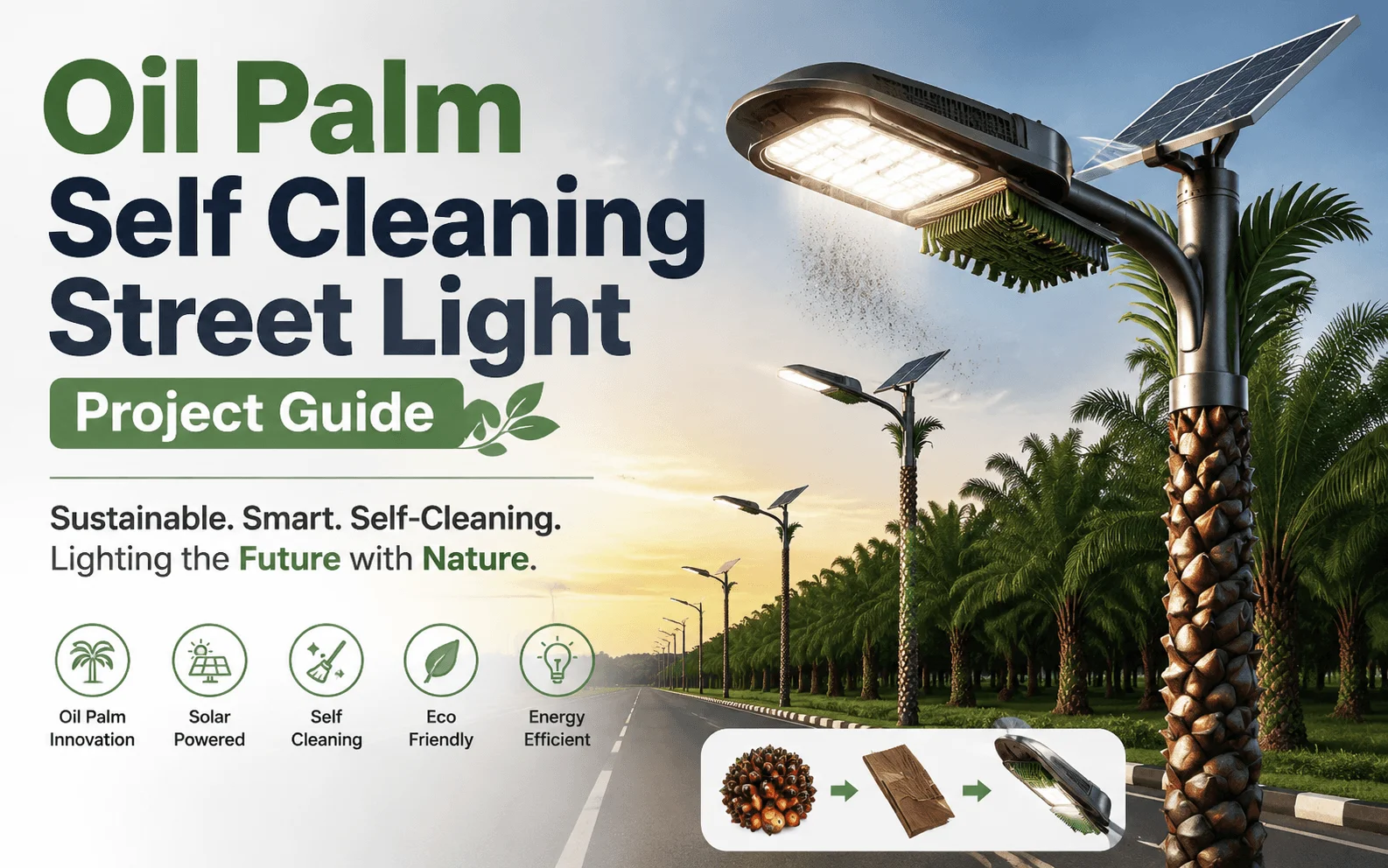
Sustainable infrastructure is no longer a future concept. It is a present day necessity, especially for regions facing rising energy costs, climate stress, and limited maintenance budgets. Among emerging innovations, the oil palm self cleaning street light project stands out as a practical blend of renewable energy design, biomimicry, and low maintenance urban lighting.
This article is written for planners, engineers, researchers, students, and decision makers who want a deep and realistic understanding of this concept. It explains what the project actually is, why oil palm inspired design matters, how self cleaning systems work in outdoor lighting, and where this solution genuinely fits in the real world. The focus remains informational, experience driven, and grounded in practical reasoning rather than hype.
The goal is to help you understand whether this project is suitable for your use case, what challenges to expect, and how such systems can be responsibly designed and evaluated.
Understanding the Core Concept
What Is an Oil Palm Self Cleaning Street Light Project
At its core, an oil palm self cleaning street light project is an outdoor lighting system that combines three key ideas.
First is renewable energy, usually solar powered lighting to reduce grid dependency.
Second is self cleaning functionality that minimizes dust, dirt, bird droppings, and pollution buildup on critical components such as solar panels and light covers.
Third is bio inspired design based on the oil palm tree, especially its trunk structure and leaf arrangement.
The oil palm is known for its natural ability to shed debris and channel rainwater efficiently. When designers borrow these characteristics, the street light structure can passively clean itself using gravity, surface texture, and rainfall, reducing the need for frequent manual maintenance.
This project concept is especially relevant in dusty, tropical, coastal, or high pollution environments where conventional street lights lose efficiency quickly.
Why Oil Palm Inspired Design Matters
The oil palm tree has evolved to thrive in harsh outdoor conditions. Its surface geometry does not easily allow dust to settle. Rainwater flows downward in a controlled way, washing away debris without damaging the structure.
When applied to street lighting, this inspiration influences several design choices.
Pole shape that discourages dust accumulation
Surface textures that reduce adhesion of dirt
Angled solar panels that allow rain assisted cleaning
Canopy like structures that protect sensitive components
This approach is not decorative. It is functional design rooted in real world observation of natural systems.
How Self Cleaning Mechanisms Work in Street Lighting
Passive Self Cleaning Systems
Most successful designs avoid motors or complex mechanical cleaners. Passive self cleaning is preferred because it reduces failure points.
Common passive techniques include.
Hydrophobic or dust resistant coatings on solar panels
Angled panel placement to allow gravity assisted runoff
Smooth curved surfaces inspired by palm trunks
Rainwater channeling grooves that guide dirt downward
These systems rely on natural forces rather than active cleaning devices. Over time, this significantly lowers operational costs.
Semi Active Cleaning Enhancements
In some advanced designs, semi active features are used.
Occasional vibration during wind movement
Low power wiper mechanisms activated only when efficiency drops
Water mist cleaning using collected rainwater
These are used carefully because adding complexity increases maintenance risk. In most rural or semi urban projects, passive systems perform better over long periods.
Why Maintenance Reduction Is a Major Advantage
Street lighting maintenance is one of the largest hidden costs in public infrastructure. Dust accumulation alone can reduce solar panel efficiency by 20 to 40 percent in certain climates.
In my professional observation of solar lighting installations, maintenance often fails not because systems are poorly designed, but because cleaning schedules are unrealistic or underfunded.
Self cleaning designs inspired by oil palm characteristics address this issue directly by reducing dependency on human intervention.
Key maintenance benefits include.
Longer solar panel efficiency retention
Fewer site visits required per year
Lower labor and equipment costs
Improved lighting reliability in remote areas
This is particularly important for highways, plantations, rural roads, and industrial zones.
Real World Applications and Use Cases
Rural and Agricultural Roads
Oil palm plantations and agricultural regions already understand the value of this tree. Lighting systems inspired by it naturally fit into these landscapes.
Benefits in rural areas include.
Reliable night visibility
Minimal maintenance infrastructure required
Compatibility with off grid solar power
Resistance to mud, dust, and insects
Such projects also support local sustainability narratives.
Coastal and High Humidity Zones
Salt spray and humidity accelerate corrosion and dirt buildup. Self cleaning features combined with corrosion resistant materials extend operational life in these areas.
Palm inspired forms also perform well under heavy rainfall, which aids cleaning rather than damaging the system.
Urban Smart Lighting Initiatives
Cities aiming for smart and sustainable infrastructure can integrate these systems with sensors and monitoring tools.
When combined with performance tracking, self cleaning designs help maintain consistent illumination levels without frequent servicing.
Technical Components Explained Simply
Structural Design
The pole is usually tapered and textured to prevent debris accumulation. Rounded profiles perform better than sharp edges.
Materials commonly used include.
Galvanized steel with protective coatings
Aluminum alloys
Fiber reinforced composites in experimental designs
Solar Energy System
The solar module is mounted at an angle optimized for both energy capture and cleaning.
Important considerations include.
Tilt angle based on latitude and rainfall
Surface coating quality
Secure mounting to withstand wind loads
Lighting Unit
Geeks it LED technology is preferred due to its efficiency and long life.
Design priorities include.
Sealed enclosures
Anti fog lenses
Thermal management to prevent overheating
Energy Storage
Battery systems are housed in protected compartments inspired by the natural shielding seen in palm trunks.
Lithium based batteries are common, but thermal insulation is critical in hot climates.
Environmental and Social Benefits
Reduced Carbon Footprint
Using solar powered lighting directly reduces reliance on fossil fuel based electricity.
Self cleaning features further improve sustainability by lowering maintenance vehicle emissions.
Improved Public Safety
Consistent lighting improves road safety and reduces crime risks in underserved areas.
When lights remain clean and functional, illumination levels stay predictable.
Aesthetic Integration with Nature
Palm inspired designs blend more naturally into green environments, reducing visual pollution.
This is especially valued in eco tourism zones and conservation areas.
Challenges and Limitations to Consider
Initial Design Complexity
Bio inspired design requires careful engineering. Poor execution can lead to water pooling or structural weakness.
Climate Dependency
Self cleaning performance depends on rainfall frequency. In extremely dry regions, dust may still accumulate faster than it can be removed naturally.
Material Cost
High quality coatings and corrosion resistant materials increase upfront costs.
However, these costs are often offset by reduced maintenance over time.
Lack of Standardization
Because this is still an emerging concept, design standards vary widely. This makes comparison between vendors difficult.
Evaluating Project Feasibility
Before adopting this concept, decision makers should assess.
Local climate conditions
Dust and pollution levels
Maintenance capabilities
Budget constraints
Expected lifespan of installation
Pilot projects are strongly recommended before large scale deployment.
Academic and Industry Research Insights
Research into biomimicry consistently shows that nature inspired surface geometries reduce contamination and improve durability.
Studies on hydrophobic coatings demonstrate measurable efficiency retention on solar panels exposed to dust heavy environments.
While not all oil palm inspired designs succeed equally, the underlying principles are scientifically sound when applied correctly.
Educational Value for Students and Researchers
This project concept is particularly suitable for.
Engineering final year projects
Sustainable design research
Renewable energy demonstrations
Smart city innovation labs
Students benefit from its multidisciplinary nature, combining mechanical design, environmental science, and energy systems.
Implementation Best Practices
Design for simplicity first
Prioritize passive self cleaning methods
Test materials under real environmental conditions
Monitor performance over time
Document maintenance savings clearly
Avoid over engineering. Nature inspired solutions work best when kept simple.
Future Outlook
As cities and rural areas push for resilient infrastructure, designs that reduce maintenance while improving sustainability will gain traction.
Advances in surface coatings, material science, and sensor integration will further enhance the effectiveness of self cleaning outdoor lighting.
Oil palm inspired concepts may also influence other infrastructure elements such as signage, shelters, and charging stations.
Frequently Asked Questions
Is this type of street light suitable for all climates
It performs best in regions with moderate rainfall and dust exposure. Extremely dry areas may require supplemental cleaning strategies.
Does self cleaning mean zero maintenance
No. It significantly reduces maintenance frequency but does not eliminate it entirely.
Are these systems more expensive than traditional street lights
Initial costs are usually higher, but long term operational savings often balance the investment.
Can existing street lights be retrofitted with self cleaning features
In some cases yes, especially through improved panel angles and surface coatings.
Is oil palm inspiration only aesthetic
No. The inspiration is functional and based on observed natural efficiency in shedding debris and water.
Conclusion
The oil palm self cleaning street light project represents a thoughtful approach to sustainable infrastructure design. By combining renewable energy, passive maintenance reduction, and bio inspired engineering, it addresses real operational challenges faced by outdoor lighting systems.
Its value lies not in novelty, but in practicality. When designed carefully and deployed in suitable environments, it can improve lighting reliability, reduce long term costs, and align infrastructure with natural principles that have already proven their efficiency over time.