






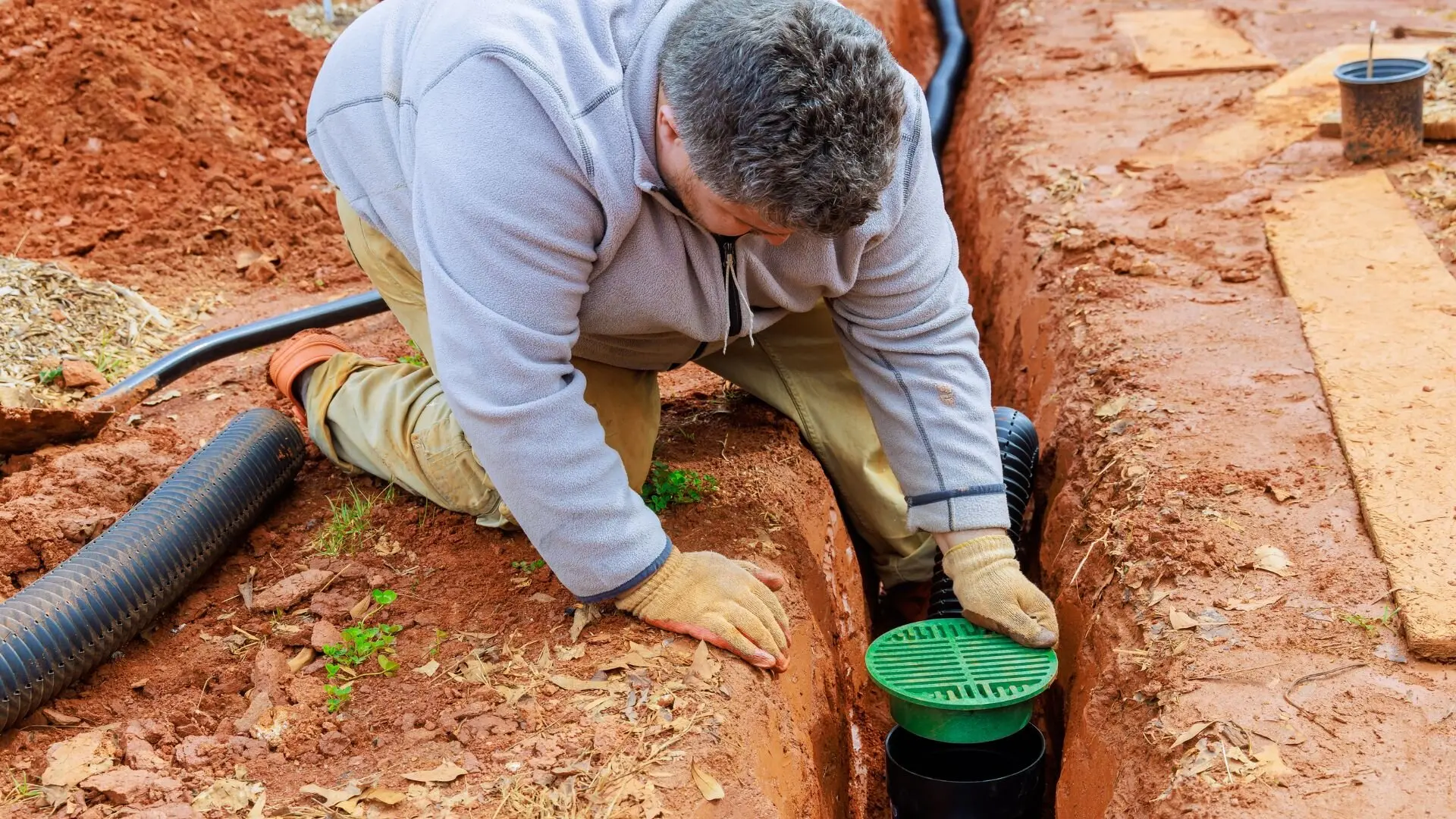
Nobody thinks about the pipes buried under their home. They just work. Day after day. Season after season. Until one morning they don’t.
A drain backs up. The yard smells wrong. A patch of grass is soggy for no reason. And by the time any of that happens the pipe has usually been quietly failing for a long time already.
How long do clay sewer pipes last under Green Valley’s soil? What about cast iron? Is PVC actually worth the difference? And when do you stop repairing and just replace the whole thing?
That is exactly what this covers.
How Long Do Sewer Pipes Last The Material Is Everything
Two homes on the same street can have completely different pipes underneath them. It all comes down to when the house was built and what material the builder used at the time.
Older Green Valley homes clay or cast iron almost every time. Homes built more recently PVC in most cases. Each material behaves differently underground. Each one fails differently too. And how long do sewer pipes last depends almost entirely on which one is sitting below your foundation right now.
How Long Do Clay Sewer Pipes Last
How long do clay sewer pipes last clay was the go-to material for residential sewer lines for a long time. It worked. It was available. Builders used it without question for decades.
Here is the problem with clay in Green Valley specifically.
The soil here moves. Monsoon season brings moisture and expansion. Dry months bring contraction. That cycle repeats over and over every single year. Clay pipe joints were never designed to handle that kind of constant movement. They crack under the pressure. They separate at the seams.
Once a joint cracks, tree roots find it. They push through the gap. Get inside the pipe where there is constant moisture and nutrients. And then they grow. Slowly. For months. Sometimes years. Until the pipe is partially or fully blocked and backing up into the house.
The worst part is that none of this shows above ground. A clay pipe with root intrusion throughout the line looks completely normal from the surface. A camera inspection is the only way to actually see what is happening inside.
How Long Do Cast Iron Sewer Pipes Last
How long do cast iron sewer pipes last? Cast iron handled pressure well. Heavier than clay, more rigid, and for a long time considered one of the toughest pipe options available for homes.
But cast iron and moisture do not get along forever.
Green Valley’s soil chemistry eats at cast iron from the outside over time. Rust forms. The pipe wall gets thinner. On the inside rough corroded surfaces collect buildup. Grease sticks. Debris catches. Flow gets slower and slower until something finally backs up or a weakened section collapses inward.
How long do iron sewer pipes last before this becomes a real issue varies from one property to the next. Some cast iron lines in Green Valley are holding up fine. Others are corroded badly and nobody knows because the outside of the pipe looks identical either way.
A camera goes inside and shows the actual condition. Nothing else does.
How Long Do PVC Sewer Pipes Last
How long do PVC sewer pipes last is where things get better. PVC does not rust. It does not crack from soil movement the way clay does. A properly installed PVC line with sealed joints gives tree roots almost no entry point to work with.
How long do house sewer pipes last when PVC is the material comes down to one thing how well it was installed. Good installation with correct slope and properly sealed joints means the line holds up for a very long time. Poor installation with loose joints or wrong slope creates problems well before they should happen.
Green Valley homes built after the mid-1980s typically have PVC below them. If the line has never caused issues it is probably in decent shape. Checking it every few years still makes sense just to stay ahead of anything developing quietly.
How Long Do Sewer Pipe Last All Three Side by Side
How long do sewer pipes last in Green Valley broken down simply by Clay. Cracks at the joints, moves with the soil, lets roots in. Older homes with clay lines that have never been inspected are overdue for a camera check to check symptoms or not.
Cast iron. Rusts from outside in, collects buildup on corroded interior walls, weakens over time without showing anything visible above ground.
PVC. Best of the three by a wide margin. Holds up long term when installed correctly. Installation quality matters more than the material itself.
Green Valley’s climate monsoon moisture, dry heat, temperature swings hits clay and cast iron harder than most places. How long do house sewer pipes last here runs shorter than national averages for both older materials.
When Does a Sewer Line Need to Be Replaced
When does a sewer line need to be replaced? This question does not have a simple age-based answer. Condition matters far more than how long the pipe has been in the ground.
Replacement is the right call when sections of pipe have fully collapsed. Nothing left to line. Excavation is the only path forward.
Root intrusion has compromised the pipe wall itself, not just restricted the flow. Clearing roots and lining a structurally damaged pipe is a short term fix at best.
Cast iron corrosion has eaten through the pipe wall in multiple spots. No structural integrity left to work with.
Damage exists across several different sections of the same line. Repairing one spot while two others are silently failing makes no financial sense.
The pipe has been repaired more than once already and problems keep coming back in new locations.
When to Replace Sewer Line vs When to Repair
When to replace sewer line versus repair here is the straightforward way to think about it.
Repair is the right move when damage is in one isolated section, the rest of the line looks reasonable on camera, and a liner or spot fix actually solves the problem without leaving weak spots behind.
Replacement makes more sense when damage shows up in more than one section, the same line has been repaired before and is failing again, the pipe has collapsed past what lining can handle, or the material is simply done.
One thing that matters here: pipe material adds context to everything. A newer PVC line with a single blockage is almost always a repair job. An older clay or cast iron line showing the same symptom might reveal on camera that the blockage is just the most obvious of several problems already forming along the line.
Camera inspection first. Every time. That footage is the difference between knowing and guessing.
Signs I Need Sewer Line Replacement
Signs I need sewer line replacement these show up before a full failure if you pay attention to them.
- Several drains are slowing down at the same time. Not just one sink. Multiple fixtures in different rooms all draining slower than normal. One slow drain is usually that drain. Several at once points at the main line.
- Sewage smells inside the home or in the yard. Odors from a working sewer stay underground. When smell starts coming up through indoor drains or sitting in the yard near the pipe path the pipe is not containing things the way it should.
- A strip of grass that is greener or soggier than the rest. Soft ground underfoot with no rain recently. Unusually fast-growing grass in a line across the yard. The pipe below is leaking into the soil and the ground above is feeding on it.
- In many cases, professional hydro jetting oro valley az services are used to clear heavy buildup, grease, and tree roots inside aging sewer lines before the damage becomes more sever
- Gurgling from toilets or drains. That sound is air being pushed backward through the system. It happens when flow is restricted further down and pressure has nowhere to go except back up.
Signs Main Sewer Line Needs Repair or Replacement
Signs the main sewer line needs repair or replacement and how to tell which situation actually applies.
One slow drain, one gurgling toilet, one recurring blockage in the same place isolated. Usually means the damage is isolated too. The camera confirms it. Liner or spot repair handles it.
Multiple slow drains, sewage smell indoors and outside, soggy yard patches, blockages showing up in different parts of the house at different times that pattern points at damage in more than one section. That is a replacement conversation.
The pipe material sitting in the ground adds weight to both sides of that conversation. A newer PVC line leans toward repair. An older clay or cast iron line with multiple symptoms leans toward replacement because the camera often shows the visible symptom is just the beginning of what is actually there.
What Green Valley Homeowners Should Do Right Now
A lot of Green Valley properties have original pipes still in the ground. Never inspected. Never repaired. Just quietly sitting there doing its job or quietly failing without anyone knowing.
Similar problems can also affect offices, restaurants, and other properties, which is why regular commercial plumbing Tucson AZ inspections help catch sewer line issues before they turn into expensive emergencies.
Older home. Never had the line looked at. Schedule an inspection.
Slow drains are already showing up. Gurgling. Wet yard patches. Do not push it to next month.
Catching a problem before it becomes a failure keeps every option open. Waiting until full collapse narrows those options down fast and costs significantly more.
Final Thoughts
How long do clay sewer pipes last. How long do cast iron sewer pipes last? How long do PVC sewer pipes last? The answers matter because one of those materials is sitting under a Green Valley home right now either holding up, quietly failing, or somewhere in the middle. When to replace the sewer line is not a calendar question. It is a condition question. And the condition only gets answered one way: a camera going through the line and showing what is actually there.
Signs I need sewer line replacement show up early. Slow drains. Smell. Wet yard. Blockages that keep coming back. These are not small annoyances. They are warnings. Get the inspection done. Know what is in the ground. Make the call with real information in front of you not after an emergency has already happened.