
Firewood Cord: The Complete 2026 Guide to Sizes, Prices & Smart Buyingfirewood cord
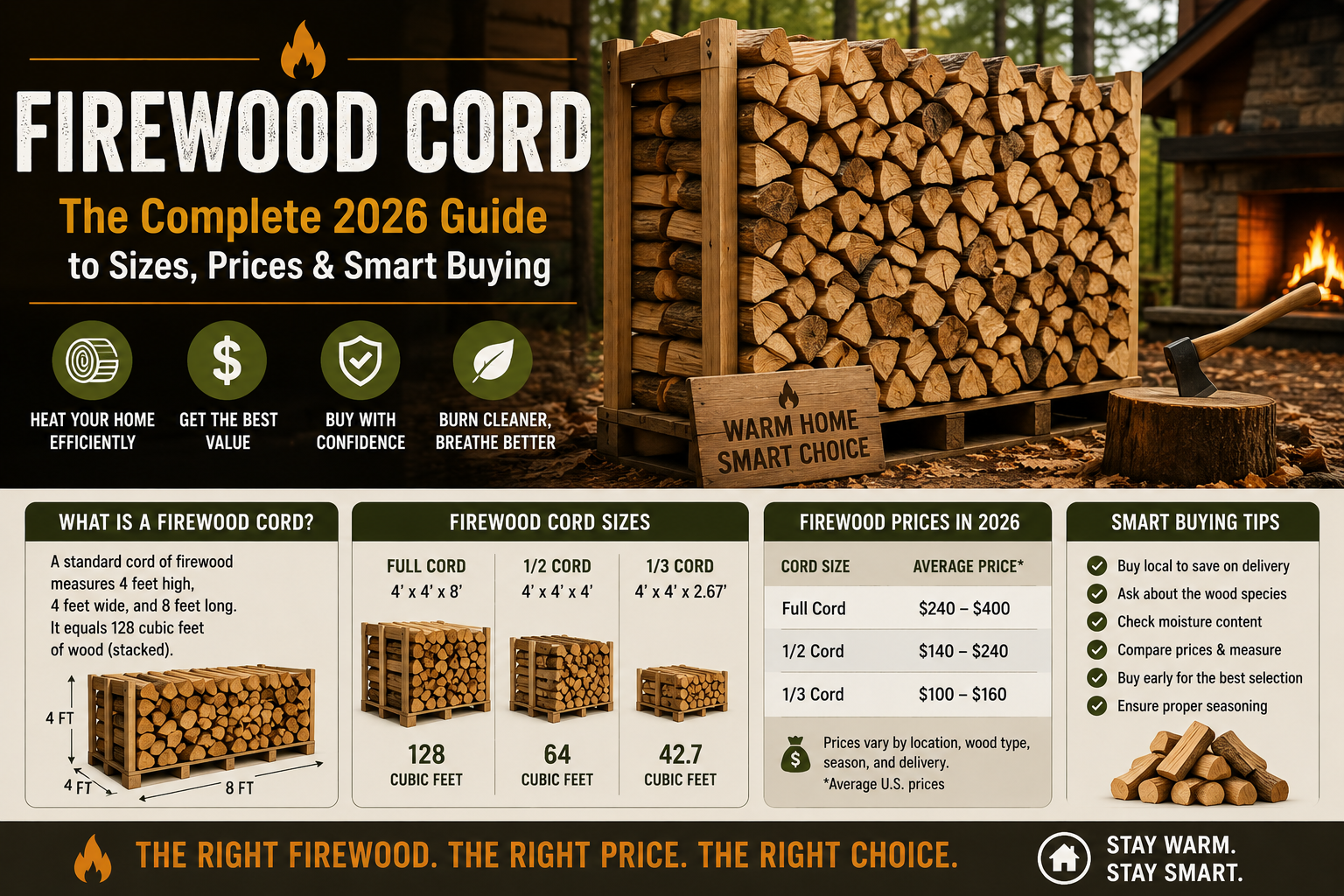
A firewood cord (full cord) is a standardized unit of stacked wood measuring 128 cubic feet — a tightly stacked pile 4 feet high, 4 feet deep, and 8 feet long. In 2026, a full cord of seasoned hardwood typically costs $250–$400 delivered, with the national range spanning roughly $150–$500 depending on wood species, location, and season. A “face cord” is only about one-third of a full cord, which is where most buyers get overcharged.
Buying firewood sounds simple — until a seller quotes you a “cord,” a “rick,” a “face cord,” or just a “truckload,” and you have no idea whether you’re getting a fair deal. The terminology confusion isn’t accidental: vague measurements are exactly how unprepared buyers end up paying full-cord prices for a third of the wood.
This guide explains everything about the firewood cord — exact dimensions, every size variation, current 2026 pricing, how long a cord actually lasts, and the specific checks that protect you from the most common firewood scams.
What Is a Firewood Cord? (Official Definition)
A cord is the legal standard unit for selling firewood in the United States and Canada. One full cord equals 128 cubic feet of wood that is “racked and well stowed” — meaning pieces are stacked parallel, touching, and compact.
The classic dimensions are:
- Height: 4 feet
- Depth: 4 feet
- Length: 8 feet
- Total: 4 × 4 × 8 = 128 cubic feet
Any stacking arrangement that produces the same 128 cubic feet also counts as a cord. The name likely comes from the old practice of measuring stacked wood with a cord or string.
A few more numbers that help you visualize it: a full cord contains roughly 600–800 split logs (cut at 16-inch lengths) and weighs anywhere from 2,500 to 5,000 pounds depending on species and moisture — far more than any pickup truck can carry in one trip.
Firewood Cord Sizes Compared (Full, Face, Half & More)
This table is your cheat sheet when comparing seller quotes:
| Unit | Dimensions | Volume | % of Full Cord |
| Full cord | 4′ H × 4′ D × 8′ L | 128 cu ft | 100% |
| Half cord | 4′ H × 4′ D × 4′ L | 64 cu ft | 50% |
| Face cord (rick) | 4′ H × 8′ L × 16″ deep | ~42–43 cu ft | ~33% |
| Quarter cord | 4′ H × 4′ L × 2′ D | 32 cu ft | 25% |
| Bundle | Retail wrap | ~0.75–1 cu ft | <1% |
Face Cord vs Full Cord: The Trap Most Buyers Fall Into
A face cord (also called a rick in many regions) has the same 4-foot height and 8-foot length as a full cord — so it looks substantial. The difference is depth: a face cord is only one log deep (typically 16 inches), giving you roughly a third of a full cord’s volume.
The scam pattern: a seller advertises “a cord” at a great price, delivers a face cord, and hopes you don’t know the difference. Always ask one direct question before paying: “Is that a full 128-cubic-foot cord, or a face cord?”
Regional slang makes things worse — you’ll hear “rick,” “rack,” “farmer’s cord” (often 2 face cords, ~86 cu ft), “truckload,” and “country cord.” None of these are standardized. Only the cord and its fractions are legally defined measurements, which is why most states require firewood to be sold by the cord or fractions of it.
How Much Does a Firewood Cord Cost in 2026?
Based on current national data, here’s what you should expect to pay:
| Quantity | Typical 2026 Price | Notes |
| Full cord | $250–$400 (avg ~$300) | Seasoned mixed hardwood, local delivery |
| Half cord | $180–$280 | Costs 55–65% of a full cord, not 50% |
| Face cord / rick | $75–$200 | Verify depth before paying |
| Quarter cord | $100–$180 | Highest price per cubic foot |
| Bundle | $5–$15 | Gas stations/stores; worst value per cu ft |
Premium situations push prices higher: kiln-dried hardwood can reach $500–$650 per cord, and in supply-scarce regions premium oak has been known to top $900–$1,100.
Price by Wood Species
- Oak: $300–$500 — slow burn, strong heat, long-lasting coals; the gold standard for heating
- Maple: $300–$450 — clean, steady burn
- Birch: $300–$550 — lights easily, pleasant aroma
- Hickory/Cherry: premium pricing, prized for heat and cooking flavor
- Pine (softwood): $150–$300 — ignites fast, burns fast; better for kindling and campfires than overnight heating
What Drives the Price Up or Down
Seven factors explain almost every price difference you’ll see: wood species (hardwood costs more, sometimes double), seasoning (dry wood commands a premium over green), season of purchase (winter demand spikes prices 20–30% vs summer), region (forest-rich states are cheaper; long-haul trucking adds roughly $2 per mile), delivery distance (deliveries beyond ~15 miles typically add $25–$100), stacking service ($20–$80 per cord extra), and urban vs rural location (city buyers pay roughly 15–20% more).
Money-saving tip: buy in late spring or summer when demand is low — you’ll save 20–30% and the wood gets extra months to season before winter. Buying green wood costs 30–50% less if you have space to dry it yourself for 6–12 months.
How Long Does a Cord of Firewood Last?
For a household burning wood twice daily as a primary heat source, one full cord lasts roughly six to twelve weeks — hardwoods stretch toward three months, while softwoods like pine can disappear in about six.
Rough seasonal planning:
- Occasional ambiance fires: a face cord or quarter cord covers the season
- Backup/supplemental heating: half to one full cord
- Primary heating in a cold climate: 2–3 full cords per winter (heavy users in northern states may need 3–5)
Seasoned vs Green Wood: Why Moisture Matters
Freshly cut (“green”) wood holds 40–60% moisture. Burning it produces excessive smoke, weak heat, and — most dangerously — creosote buildup in your chimney, a leading cause of chimney fires.
Properly seasoned firewood has a moisture content of 20% or below, which is the threshold recommended by the EPA’s Burn Wise program. At that level, wood ignites faster, burns hotter, and smokes far less. Getting there takes 6–12 months of air-drying (dense oak can take longer), or sellers can kiln-dry wood in a matter of days — which is why kiln-dried costs more.
A $15–$30 moisture meter is the best small investment a firewood buyer can make: press it into a freshly split face of a log and reject any delivery reading well above 20% that was sold as “seasoned.”
How to Avoid Firewood Scams: 6-Point Checklist
- Get the unit in writing. “Cord” should mean 128 cubic feet — confirm it’s not a face cord, rick, or vague “truckload.”
- Measure after stacking. Stack the delivery and multiply height × depth × length. If it doesn’t reach the volume you paid for, you have grounds for a complaint (most states’ weights-and-measures offices handle firewood disputes).
- Check moisture, not just the seller’s word. “Seasoned” claims vary wildly between vendors.
- Know your truck math. A standard pickup with an 8-foot bed holds only about half a cord. Anyone claiming to deliver a full cord in one regular pickup load is short-changing you.
- Ask what species you’re getting. “Mixed hardwood” should be named species (oak, maple, ash, cherry) — not mystery scraps or construction debris, which can contain nails and chemicals.
- Buy local wood. Beyond cost, transporting firewood long distances spreads invasive pests — many states restrict firewood movement for this reason.
How to Store a Cord of Firewood Properly
Even perfectly seasoned wood degrades with bad storage. Follow these rules:
- Elevate it off the ground on a rack or pallets to prevent rot and pest access
- Cover the top only — leave sides exposed to sun and airflow so moisture keeps escaping
- Keep it away from your house. Stacking against exterior walls invites termites, carpenter ants, and creates a fire hazard; leave at least a few feet of gap
- Stack bark-side up outdoors to shed rain
- Bring in small amounts at a time — storing lots of wood indoors invites insects into your home
A full cord needs a footprint of roughly 4 × 8 feet — plan the space before delivery day, and decide in advance whether the $20–$80 stacking service is worth it (a full cord is a genuine multi-hour workout to stack yourself).
Frequently Asked Questions (FAQs)
What are the exact dimensions of a firewood cord? A full cord is a compact stack measuring 4 feet high, 4 feet deep, and 8 feet long — 128 cubic feet total. Any configuration that equals 128 cubic feet of well-stacked wood qualifies.
How much does a cord of firewood cost in 2026? Most buyers pay $250–$400 for a delivered full cord of seasoned hardwood, with the national range spanning about $150–$500. Kiln-dried and premium species run $500 or more.
What’s the difference between a face cord and a full cord? A face cord matches a full cord’s height (4 ft) and length (8 ft) but is only one log deep — about 16 inches — making it roughly one-third the volume. It should cost roughly one-third the price.
How many pieces of wood are in a cord? Approximately 600–800 split pieces when cut to standard 16-inch lengths, depending on log diameter and stacking tightness.
Will a cord of firewood fit in my pickup truck? No. A full-size pickup with an 8-foot bed holds about half a cord; smaller trucks and SUVs hold a quarter to a third. A full cord requires a dump truck, trailer, or multiple trips.
How long should firewood season before burning? At least 6–12 months of air-drying after splitting, until moisture drops to 20% or below. Dense hardwoods like oak may need a full year or more.
Is it cheaper to buy firewood in summer? Yes — off-season purchases (late spring through summer) typically save 20–30% versus peak winter prices, and give the wood extra drying time before you need it.
Final Thoughts
A firewood cord is one of the few purchases where knowing a single number — 128 cubic feet — can save you hundreds of dollars. Confirm the unit before you pay, measure after delivery, verify moisture with a cheap meter, and buy in the off-season. Do those four things and you’ll never overpay for firewood again, while keeping your home warmer and your chimney safer all winter long.